Why OpenAI Is Buying Thousands of Apple Macs to Train AI
- September 16, 2026
- 11:09 am
Something unusual is happening in the AI hardware world, and at first glance, it doesn’t make much sense.
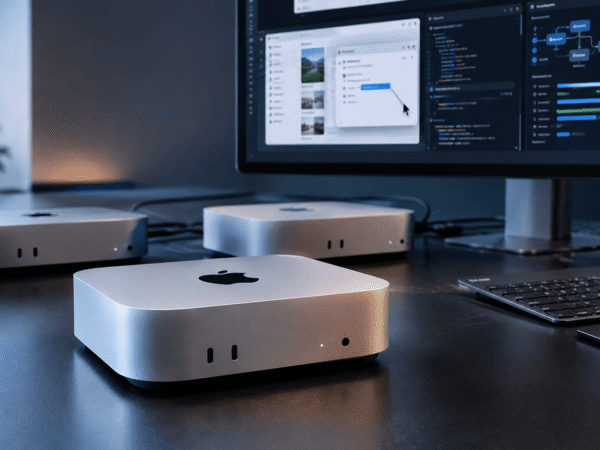
While the AI industry is obsessed with Nvidia GPUs, massive data centers and increasingly enormous clusters of specialized computing hardware, OpenAI is reportedly buying something that looks almost comically ordinary by comparison: Apple Macs.
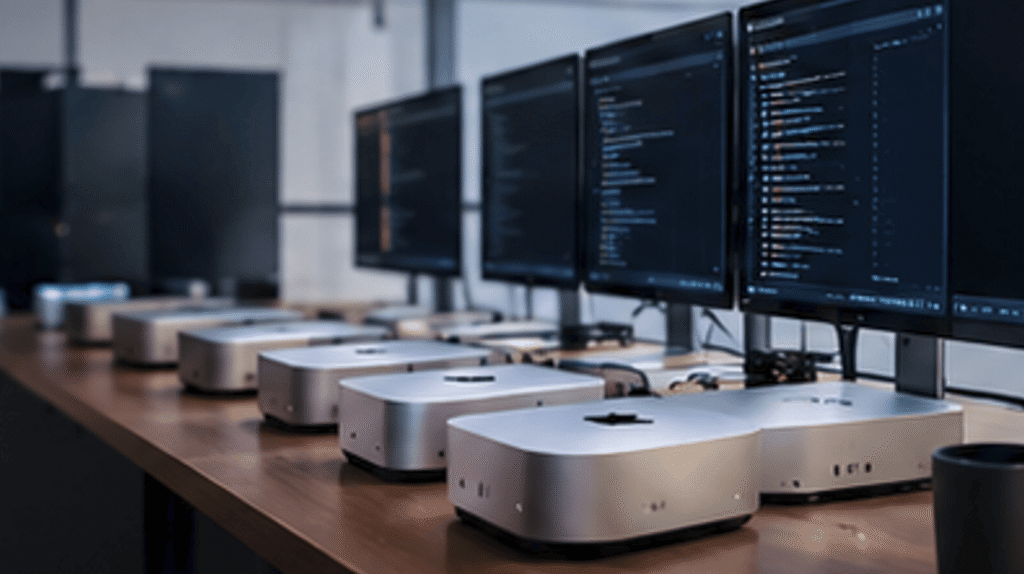
According to reporting from The Information, OpenAI has purchased tens of thousands of Mac minis and Mac Studios, with the company looking to acquire even more. The machines are reportedly being used for reinforcement learning and for training computer-use agents.
That last part is the important bit.
Because this isn’t really a story about OpenAI deciding that Macs are suddenly better than Nvidia GPUs. They’re not. It’s a story about the kind of AI companies are trying to build next, and why an ordinary desktop computer has suddenly become an interesting piece of AI infrastructure.
The more you look at it, the stranger the story becomes.
And, eventually, it starts to make perfect sense.
OpenAI Doesn't Need Macs to Build Another Chatbot
For years, when we talked about AI training, the picture was fairly easy to understand.
A company builds a huge model, feeds it an enormous amount of data and throws an extraordinary amount of computing power at the problem. That is one reason Nvidia became so important to the AI boom. Its GPUs are exceptionally well suited to the massive parallel workloads involved in training and running today’s most powerful models.
But the next generation of AI isn’t supposed to simply answer questions better.
It is supposed to do things.
That’s a much harder problem.
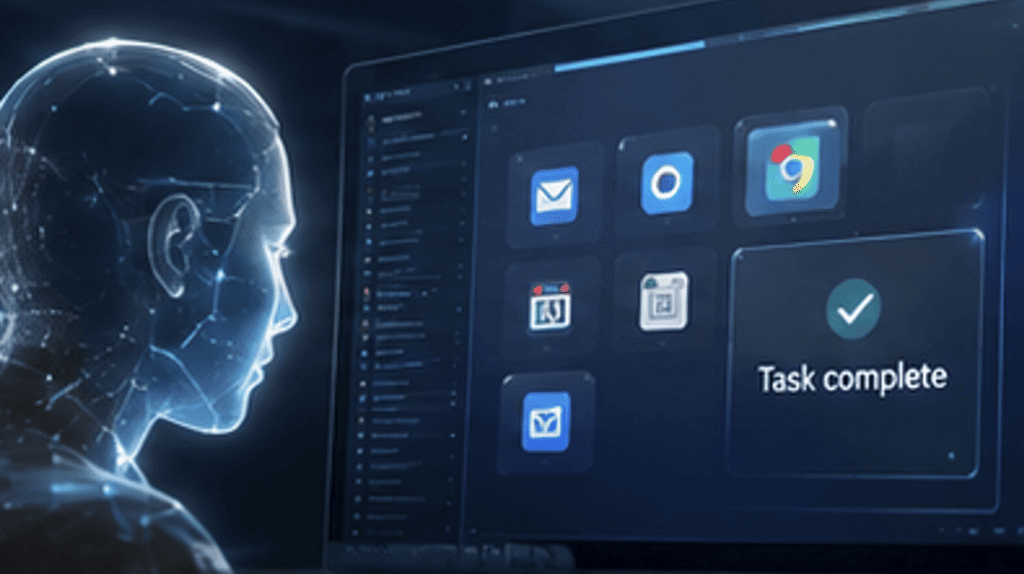
Imagine asking an AI to book a hotel. A conventional chatbot can tell you which hotels are available and explain how to make a reservation. An AI agent is supposed to open the browser, visit the website, search for the hotel, compare the rooms, select the right dates, fill in the necessary information and potentially complete the reservation.
Now imagine doing that with hundreds of different websites, thousands of different applications and millions of different situations.
Suddenly, knowing how to write a convincing paragraph isn’t enough.
The AI needs to understand what is happening on a screen. It needs to know where to click. It needs to recognize when something went wrong and figure out how to recover. It needs to remember what it was trying to accomplish several steps earlier and adjust its plan when the computer doesn’t behave exactly as expected.
In other words, OpenAI isn’t just trying to build AI that can talk to computers.
It’s trying to build AI that can use them.
And that changes the hardware equation.
The Macs Are the Classrooms
This is the part of the story that makes the huge Mac purchase easier to understand.
You can’t really teach an AI to use a computer without giving it computers to use.
That’s where reinforcement learning comes into the picture.
The basic idea isn’t particularly difficult to understand. Give an AI a task, let it attempt the task, evaluate what happened, and use that feedback to make the system better. Do it again. And again. And again.
The AI will make mistakes along the way.
It will click the wrong button. It will open the wrong menu. It will misunderstand a webpage. It will get stuck in an application and have to figure out how to get back on track.
That’s not necessarily a failure. It’s part of the training process.
If you’re trying to teach an AI agent how to operate a computer, you need a computer environment in which it can practice making those mistakes.
That’s why the Macs are perhaps better thought of as classrooms rather than the AI itself.
The enormous Nvidia clusters are still doing the heavy lifting for many of the industry’s most demanding AI workloads. The Macs are being used for a different purpose: creating environments in which agents can learn how computers actually work.
And suddenly, thousands of small desktop machines don’t sound quite so ridiculous.
Why Use a Mac?
There is another obvious question.
If OpenAI has access to some of the most powerful computing infrastructure on Earth, why bother with Apple hardware at all?
Part of the answer appears to be the characteristics of Apple Silicon.
Apple’s chips aren’t designed to compete directly with Nvidia’s data-center GPUs, and it would be misleading to suggest otherwise. But Apple Silicon has a combination of characteristics that can be useful for workloads involving local AI and computer interaction.
The CPU and GPU share unified memory, for example, which can make certain workloads involving large models and data movement particularly interesting. Apple has also continued increasing the amount of memory available in its high-end desktop machines, while maintaining the relatively compact and power-efficient designs that have become a hallmark of Apple Silicon.
The latest Mac mini M6 is perhaps the clearest example of where Apple sees this going.
Apple is now openly marketing the Mac mini M6 as a machine for on-device AI and “always-on agentic computing.” The new M6 model can be configured with up to 32GB of unified memory, while Apple’s latest generation of chips brings substantial improvements in CPU, GPU and AI performance compared with the previous generation.
That’s a very different pitch from the Mac mini we knew a few years ago.
The little computer that used to be associated with people building affordable home desktops is increasingly being positioned as a machine capable of running serious local AI workloads.
And that is exactly the kind of hardware that becomes interesting when you’re trying to run AI agents continuously.
The Mac Mini's Secret Weapon Is That It's a Real Computer
There’s another detail here that is easy to overlook.
When you’re training an AI agent to interact with software, you don’t just need computing power. You need an environment that behaves like the environment the agent will eventually encounter in the real world.
A Mac gives you an operating system, a graphical interface, applications, windows, menus, files and all the little annoyances that make computers computers.
That’s important.
If an AI is eventually expected to sit in front of someone’s computer and get work done, training it exclusively in an abstract environment isn’t enough. At some point, it needs to interact with the real thing.
This is one reason OpenAI’s computer-use research is so interesting. The company’s Computer-Using Agent technology is designed to interpret screenshots and interact with graphical interfaces using actions such as mouse movements and keyboard input.
The goal is not simply to tell you which button to press.
The goal is for the AI to press it.
That distinction sounds small, but technically it’s enormous.

Apple May Have Accidentally Created a Useful AI Machine
There’s a funny twist to all of this.
Apple didn’t build the Mac mini specifically because it thought OpenAI would eventually buy tens of thousands of them.
The Mac mini was designed to be a compact desktop computer.
But Apple Silicon changed what that compact computer could do.
The combination of relatively powerful processors, unified memory, low power consumption and increasingly capable neural processing has made the Mac mini surprisingly interesting for developers experimenting with AI locally.
And the latest Mac mini M6 pushes that idea even further.
Apple says the M6 Mac mini delivers up to four times faster AI performance than the previous M4 generation in its own testing, while the machine itself remains remarkably small. Apple is also highlighting support for agentic AI workflows and on-device models.
That doesn’t mean everyone needs a Mac mini to run AI.
It does mean the definition of what a tiny desktop computer can be used for is changing.
A machine that once sat underneath a monitor in a home office can now become part of a much larger AI experiment.
Then Things Get More Serious With the Mac Studio
The Mac Studio takes Apple’s approach and turns the dial considerably further.
Unlike the Mac mini, the Mac Studio is aimed squarely at people who need serious desktop performance. Apple’s latest generation comes with M5 Max and M5 Ultra chips, with dramatically more memory and computing resources than the smaller machine.
The M5 Max version can be configured with up to 128GB of unified memory.
Then there’s the M5 Ultra.
The Mac Studio M5 Ultra can be configured with up to 512GB of unified memory, with Apple quoting memory bandwidth of up to 1.2TB/s.
Those numbers are difficult to appreciate until you remember that we’re talking about a desktop computer sitting on a desk rather than a traditional server rack.
Apple is also allowing multiple Mac Studio systems to be connected using Thunderbolt 5 and RDMA technology, effectively allowing them to work together for certain distributed AI workloads.
That’s where the Mac Studio starts looking less like a fancy desktop and more like a piece of infrastructure.
For most people, of course, this is complete overkill.
But that’s not really the point.
The interesting thing is that Apple has created a desktop platform with enough shared memory and computing capability to make serious local AI experimentation possible without immediately moving everything into a cloud data center.
And Then There's the Mac Studio M5 Ultra
The Mac Studio M5 Ultra is where Apple’s strategy becomes particularly interesting.
Apple starts the M5 Ultra configuration at $5,499 in the United States, putting it firmly outside the mainstream desktop market. But the price isn’t really what makes it interesting.
It’s the memory.
With up to 512GB of unified memory, the Mac Studio M5 Ultra can accommodate models and workloads that would be difficult or expensive to run locally on a typical consumer machine.
Apple says the system is capable of running extremely large AI models on-device, and it is clearly targeting developers, researchers and professionals who want substantial AI compute without immediately turning to a remote cloud environment.
That doesn’t make it a replacement for an Nvidia data center.
It makes it a very powerful local AI machine.
And that distinction matters.
No, OpenAI Isn't Replacing Nvidia
This is probably the biggest misconception someone could take away from the story.
OpenAI buying Macs doesn’t mean the company has suddenly discovered a secret alternative to Nvidia.
There isn’t one.
The AI industry’s enormous GPU clusters still exist for a reason. Training frontier models and handling huge inference workloads requires extraordinary amounts of specialized compute.
The Macs are useful for a different part of the problem.
Think of it this way: a Formula 1 team doesn’t use the same vehicle for every job.
You need the race car for the race. You need the simulator for testing. You need the tools in the garage. You need computers for analyzing data.
They all contribute to the same goal, but they don’t need to perform the same task. AI infrastructure is starting to look like that.
Some machines train enormous models. Others run inference. Some generate data. Others evaluate models. And some provide the environments in which agents learn how to interact with the digital world.
The fact that one of those environments happens to be a Mac is what makes this story interesting.
Why Not Just Rent Everything From the Cloud?
Cloud computing is incredibly convenient, but convenience doesn’t mean it’s always the cheapest or most practical option.
If you’re running thousands of machines continuously for training experiments, the bill can become enormous.
Owning hardware also gives an AI company a predictable environment. You know what machine you’re running, what operating system it’s using, what software is installed and how the environment behaves.
For computer-use agents, consistency can be valuable.
You want to be able to run an experiment, reproduce it, change one variable and run it again.
And if you’re doing that thousands or millions of times, the economics of owning the hardware can start looking very different from renting it by the hour.
According to The Information, other AI companies are exploring similar approaches. Anthropic has reportedly been using Mac minis through AWS for computer-use work as well.
If those reports are accurate, this starts looking less like an unusual OpenAI experiment and more like the early stages of a broader trend.
The Real Race Isn't About Chatbots Anymore
This is ultimately why the story matters.
The first wave of generative AI taught us that computers could understand language surprisingly well.
The next wave is about whether they can act.
That’s a much harder challenge.
An AI that writes an email is impressive.
An AI that reads your inbox, understands which messages need responses, drafts them, opens the relevant applications, checks a spreadsheet, updates a calendar and completes the entire workflow is something else entirely.
That kind of system needs more than intelligence. It needs persistence. It needs perception. It needs memory. It needs the ability to recover from mistakes. And, perhaps most importantly, it needs somewhere to practice.
That’s why the humble Mac mini has suddenly found itself sitting in the middle of a story about the future of artificial intelligence.
The Mac Mini May Be the Least Interesting Part of This Story
The headline sounds strange because we’re used to thinking about AI hardware in terms of gigantic machines.
Nvidia GPUs. Data centers. Cooling systems. Massive power requirements. Billions of dollars in infrastructure.
Then along comes a tiny aluminum box that sits quietly on a desk. But maybe that’s exactly the point. The future of AI isn’t going to be powered by one kind of computer.
There will still be enormous data centers training frontier models. There will still be specialized accelerators and massive GPU clusters. But increasingly, AI companies also need ordinary-looking computers that their agents can interact with, learn from and eventually control.
That’s where the Macs come in.
The Mac mini M6 is small enough to deploy in large numbers while offering the memory and processing power needed for many local AI experiments.
The Mac Studio takes the concept much further, providing substantially more memory and compute for developers and professional workloads.
And the Mac Studio M5 Ultra represents Apple’s most extreme version of the idea, with up to 512GB of unified memory and enough hardware to make genuinely large local AI workloads possible.
But none of these machines is the real story.
The real story is what the AI needs them for.
The industry is moving from AI that simply answers questions toward AI that can operate software, navigate websites, manipulate files and complete tasks on its own.
And you can’t teach an AI to use a computer without giving it computers to use.
So perhaps the strangest thing about OpenAI reportedly buying thousands, or even tens of thousands, of Macs isn’t that Apple suddenly has a role in AI infrastructure.
It’s why those computers are needed in the first place.
The Macs aren’t necessarily the AI.
They’re the classrooms.
And if AI agents really are the next big step in the industry, we may be about to need a lot more classrooms.
The Macs behind the story
If you want to see the hardware that is at the center of this unusual shift toward local and agentic AI, these are the three machines worth looking at:
The most affordable entry point and the machine most closely associated with Apple’s push toward compact, always-on AI and agentic computing.
A much more powerful desktop aimed at developers, professionals and demanding local AI workloads.
The extreme option, with up to 512GB of unified memory and the kind of hardware aimed at serious local AI experimentation.
Disclosure: This article contains affiliate links. If you purchase a product through one of these links, we may earn a commission at no additional cost to you.